



User Stories

Organic farmer gets tough on weeds
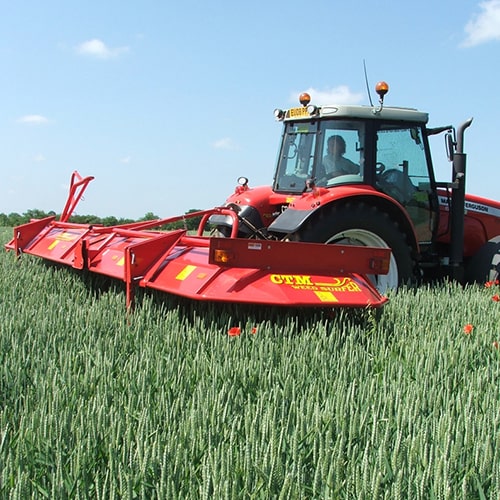
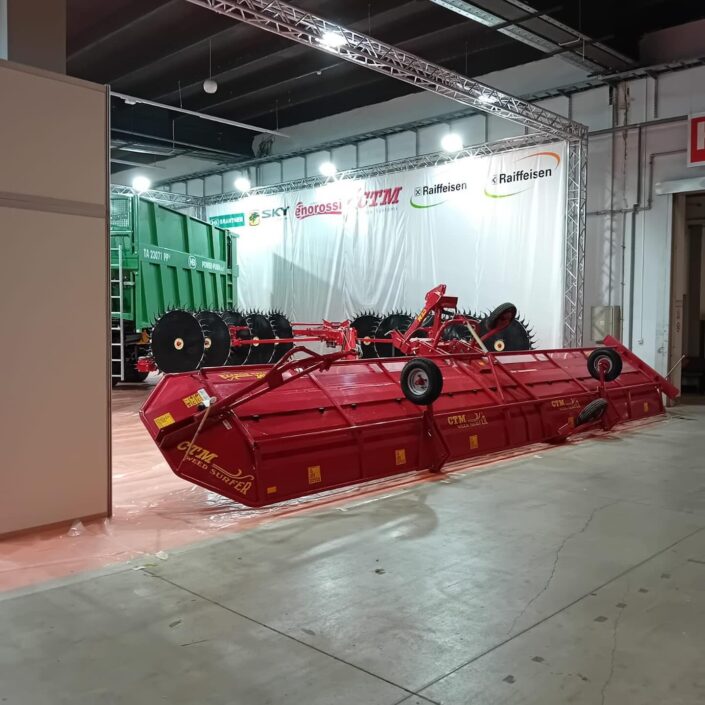
Shimpling Park Farm near Bury St Edmunds is a fully organic exercise stretching to around 2400 acres. Owner John Pawsey accepts that there are no half measures in the war on weeds. Having bought his first 9m CTM Weed Surfer in 2009, he has added a second, this one with hydraulic height adjustment wheels. “We liked it so much, we bought another!”
“Rigid height wheels can be limiting when land beside the cultivated field is often lower than the seedbed. These hydraulic wheels allow the operator to trim the angle of the ‘Surfer while he goes along, compensating any variance” John explains. “Whilst 3 point linkage adjustment can compensate a bit, it can become unstable. The hydraulic wheels work independently on 2 spools and eliminate any yawing. In fact we have ordered a set for the first machine too”.
John started converting the farm to organics in 1999 which steadily progressed until completion in 2007. The Weed Surfers joined his existing arsenal of weeders: a guided hoe and a tined weeder.
The ‘Surfers are used on a wide variety of crops: wheat, barley, beans, trickikale, oats, clover and vetches, effectively coping with their various heights.
10 metres wide, John’s Weed Surfers have fourteen 4 blade rotors giving an 8.9m metre cutting path. There is also a standard model with ten rotors and a 6.4m cut. Both are suitable for a standard tractor pickup hitch. Drive is from the tractor’s 1000 rpm power take off shaft through the machine input slip clutch to gearboxes interconnected with drive shafts.

John has learnt that it is important to hit weeds hard and early. Once wild oats flower there are 10 to 14 days before the seeds set. “We have learnt to cut as soon as the seed ’splits its boot’. The first cut wacks the top off. The tillers will keep coming so we repeat 2 weeks later to take them out. In a particularly heavy population we will go a third time.” Tests have shown that 98% of early cut oats are non-viable, left for 10 to 14 days this drops to 80%.
The Weed Surfers are busy from mid-June to early July. A brief period but it is critical that they are available when needed and, as John points out, they are relatively inexpensive compared to spraying. He has observed that the denser the crop, the higher the weeds grow to reach the sunshine so they have steered away from widely spaced seeding.
John’s drivers have learnt to set the ‘Surfers low onto the crop. “We set the ‘Surfer so the top frame is touching the top of the crop”. In heavy infestation he’s quite relaxed about clipping the top of wheat crops. “It may seem brutal but better this than risking any oats surviving for next year”.
“We tilt the ‘Surfer slightly so the front is higher than the back. This avoids weds springing back after the blades have passed. The downdraft from the blades is sufficient to push the crop down out of their reach.”
CTM 9003XL: Lincolnshire Haulier tests CTM’s latest radio control system .

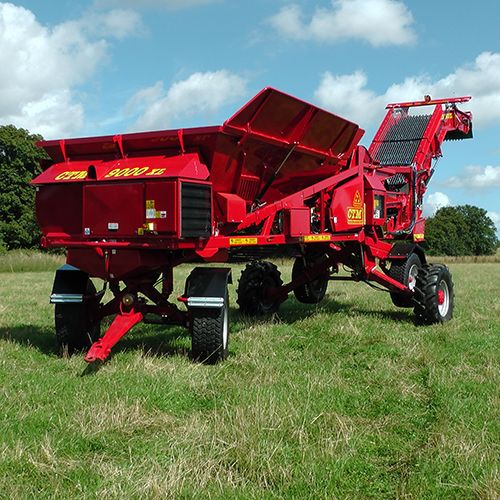
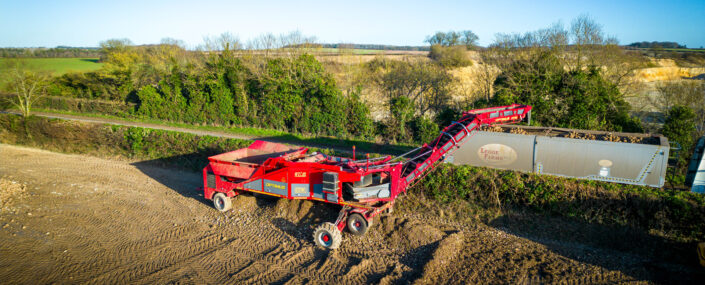
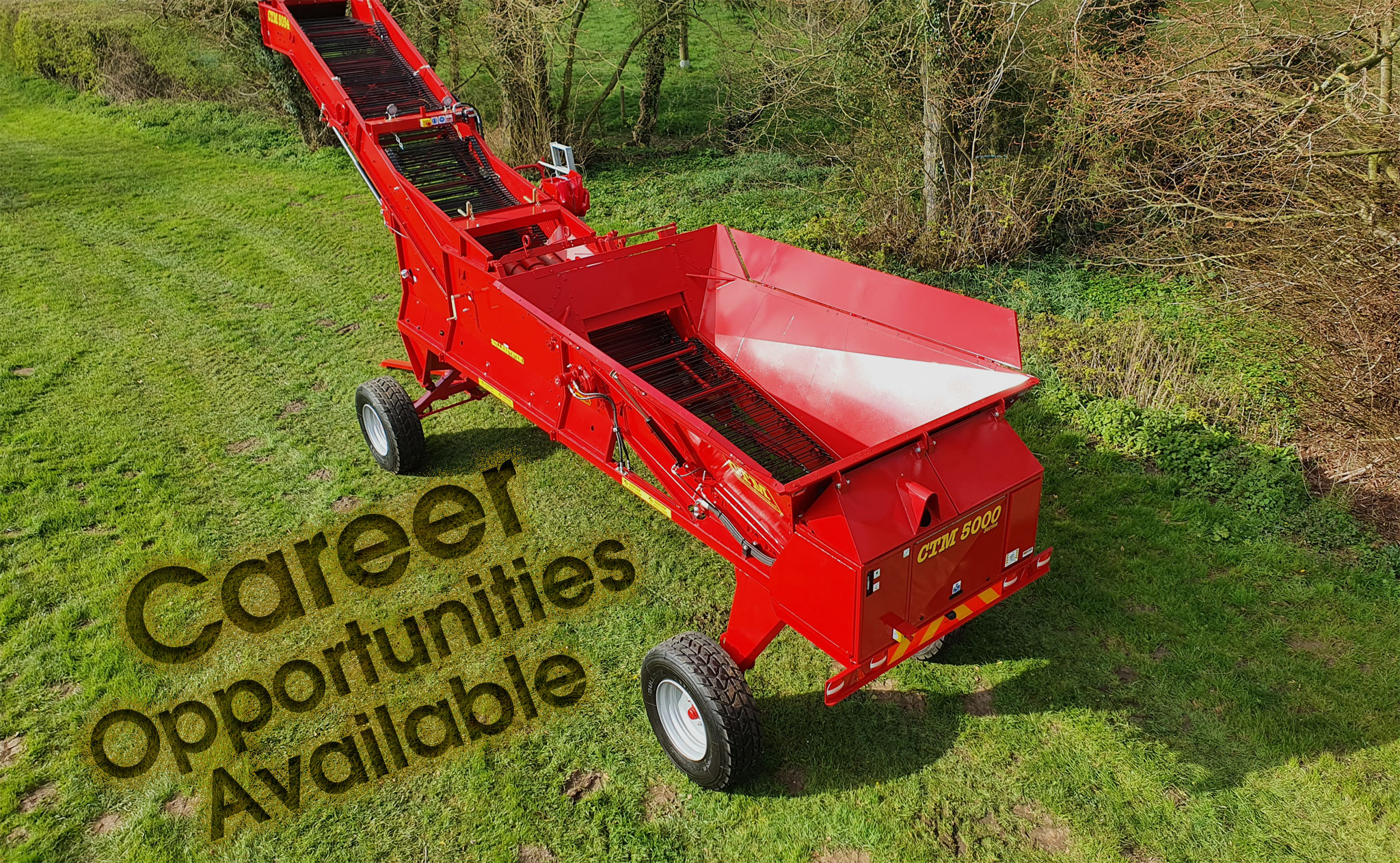
Despite the continuing success of the Euro Maus self-propelled cleaner loader (9 will be used the current campaign), there remains a key role for CTM’s own 9000 series alternative, especially with its self-drive capacity.
Lincolnshire based M & J Haulage did indeed trial a self-propelled machine and although very impressed, opted for a new CTM 9003XL to replace his existing 9000
model. “I realised the 9003 could offer the flexibility and convenience that my customers demand” explained Mark Popplewell of M&J who also operates two CTM 500 series loaders. “But I needed a control system that could be operated by the loading bucket operator from inside his cab or on the ground”.
Previously CTM cleaner loader operators have had the option of an umbilical linked control panel for manoeuvring the machine along the beet clamp and positioning the elevator to suit the receiving lorry. Their new radio control system, however, does away with the need to stand beside the machine, giving the driver overall control the CTM machine without leaving his seat.
Apart from eliminating much getting in and out of the cab, the new controls mean the driver retains his over view of the working site, the cab invariably giving the best view of all that is going on, this aiding health and safety around the machine.
And there are other practical benefits. “Last week it rained and there was deep mud around the clamp. We just kept moving as if were dry!”
The controls are simple to use with individual controls including stop/start, forward and reverse movement along the clamp, steering and elevator movement, both swing and elevation and beet flow, a total of 26 functions.
Once the cleaner loader is positioned, the operator can stop and start the engine and the hydraulic conveyors from his cab. Hopper speed is pre-set at the machine, but radio controls can alter the flow of beet via a hopper gate and engine speed. A powerful CTM web type PRECLEANER ensures that tare levels are kept to a minimum even when loading at 6 tonnes a minute.
Between lorry loading operations, the loading shovel driver can manoeuvre the cleaner loader away from the spoil heap to spread or remove it.
The in cab controller, which is also portable to take out and use in the area of the machine, uses a quick change battery pack which lasts up to 2 days. An in-cab charger prepares the spare battery, which can be changed over in seconds.
M&J Haulage, have installing the new control system in their Volvo L70F loading shovel and working with the 9003XL cleaner loader with slewing elevator and hydraulic drive wheels.
M&J Haulage lift and transport beet right across Lincolnshire using up to 9 lorries, each carrying 4 or 5 loads a day in BSC Newark. Driver Paul Williamson appreciates the time saving benefits of the new system and the convenience of controls at his finger tips.
The last word goes to Mark Popplewell, “We’re that pleased it’s working that well. It’s an unbelievable bit of kit“.
ROPA euro Tiger: 8,500 acres of beet: one set of flails!
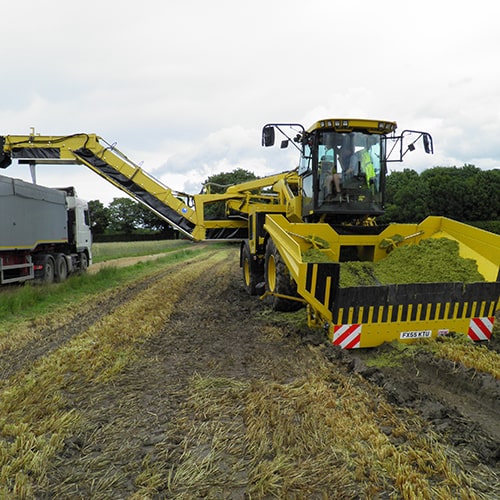
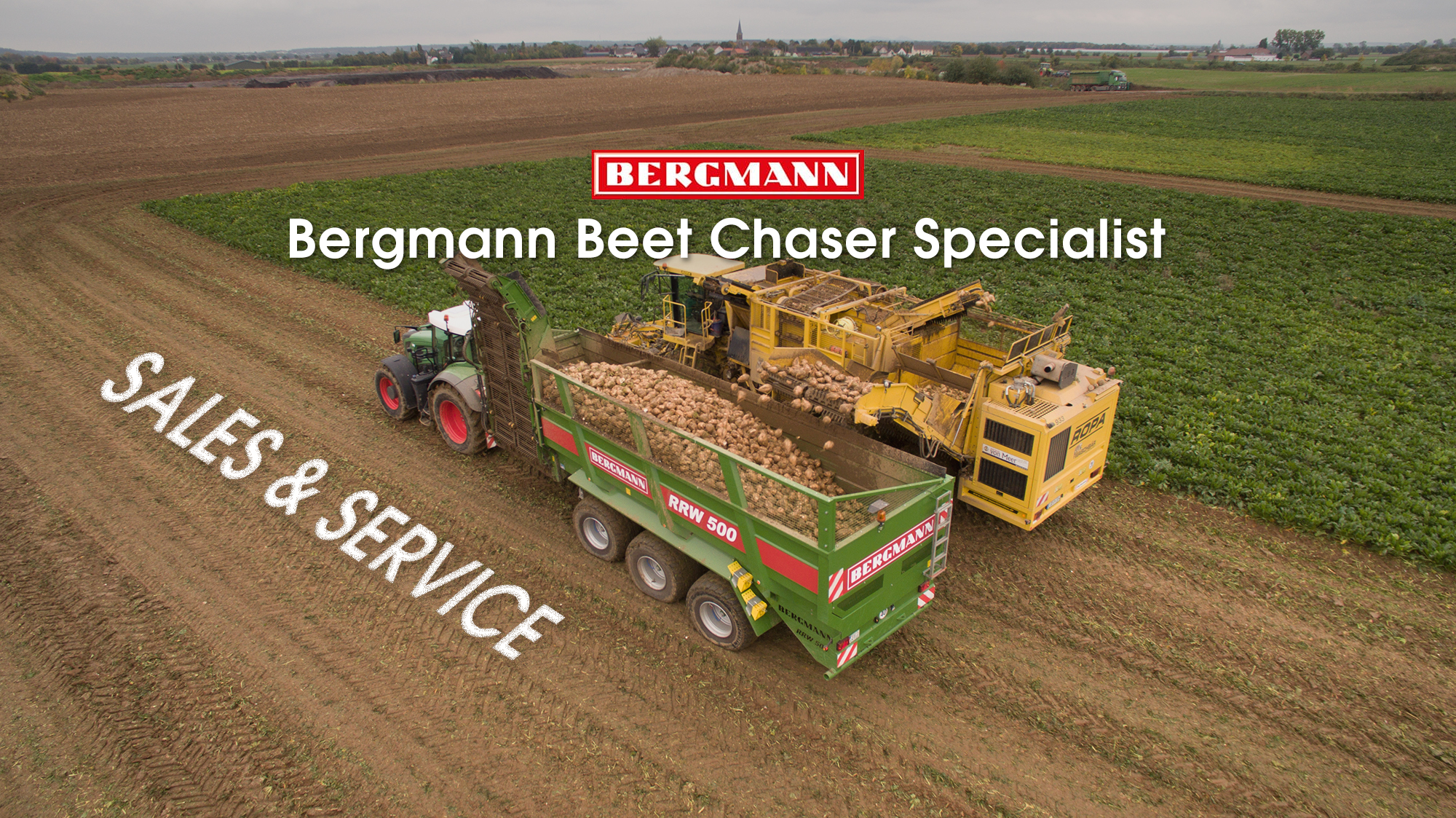
Russell Brothers of Stowbridge, Norfolk report that they have lifted 8,500 acres of beet with the original set of flails on one of their ROPA euro Tiger harvesters. In fact the canopy on the lifting unit canopy has worn through before the flails!
Mike Russell says that besides the build quality of the euro Tigers, his family are impressed by the high manoeuvrability of this relatively large piece of kit, its sure footedness and its outstanding fuel economy.
ROPA’s latest euro Tiger V8-3 has a Mercedes V8 engine providing 604hp, their most powerful yet and coupled with latest technology ‘Automotive Drive’ optimising power requirement to performance for on field or road use. This means the euro Tiger now runs at lower revs to increase fuel efficiency by up to 20%.
Euro Tigers are able to maintain accurate harvesting at 8 kph whilst running at 1275 rpm, even while unloading on the move. At this speed the frugal harvester uses less fuel than smaller harvesters lifting at lower speeds.
Lifting operations are controlled by joystick with the onboard computer showing exactly what is happening. The operator now has the convenience of 3 pre-set programmes, ensuring quick response to changing field conditions. The lifting shares are also computer set and controlled by a much larger, powered depth wheel than previous models.
The operator can individually run turbines, rollers, ring trace or shares from ground level controls for servicing or unblocking an obstruction.
Russell Brothers are probably the UK’s largest beet lifting contractors, operating 3 ROPA Euro Tigers harvester across West Norfolk and the Fens.